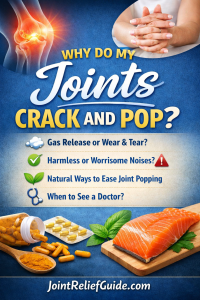
🦵 Why Do My Joints Crack And Pop? What’s Normal, What’s Not, And When To Worry

🌿 Should You Be Worried About Those Popping Sounds?
If you’re over 40, chances are you’ve asked yourself: Why do my joints crack and pop every time I stand up, stretch, or climb the stairs?
That snap in your knees…
That pop in your shoulders…
That crack when you open your fingers in the morning…
For many people, joint noises bring anxiety — especially if you already deal with stiffness, arthritis, or limited mobility. The good news? Most joint cracking and popping is harmless. The even better news? When it does signal a problem, your body usually gives clear warning signs.
In this myth-busting guide, you’ll learn:
-
What actually causes joint popping
-
When joint noises are normal vs concerning
-
Whether knuckle cracking is safe
-
Natural ways to protect and strengthen your joints
-
When it’s time to talk to a doctor
Let’s break it down in a clear, practical, and reassuring way.
🦴 What Causes Joints To Crack And Pop?
Joint noises can come from several sources. Understanding joint popping causes helps remove fear and focus on what matters.
💨 Gas Release Inside The Joint (The Most Common Cause)
This is the classic explanation — and it’s backed by science.
-
Joints are filled with synovial fluid
-
This fluid contains dissolved gases (oxygen, nitrogen, carbon dioxide)
-
When pressure changes (stretching, bending), gas bubbles collapse or form
-
That sudden change creates a popping sound
✅ This is normal and harmless
✅ No damage to cartilage
✅ No increased arthritis risk
This explains why cracking your knuckles doesn’t usually hurt.
🦴 Tendons Or Ligaments Moving Over Bone
Sometimes the sound comes from soft tissues snapping back into place.
-
Tendons slide over bony structures during movement
-
Tight or slightly misaligned tissues may “catch”
-
When released, they snap — creating a pop
This often happens in:
-
Knees
-
Ankles
-
Shoulders
-
Hips
💡 This is common after sitting too long or during the first movements of the day.
🦵 Joint Misalignment Or Muscle Imbalance
As we age, posture changes and muscle imbalances become more common.
-
Weak stabilizing muscles
-
Tight surrounding muscles
-
Poor alignment during movement
All of these can increase joint noises and health concerns.
✅ Improving strength and mobility often reduces popping sounds.
⚠️ Cartilage Wear Or Joint Degeneration
This is the cause people fear most — but it’s not the most common.
-
Cartilage becomes thinner with age or arthritis
-
Bone surfaces may rub together
-
This can cause grinding, cracking, or clicking
⚠️ When cartilage wear is involved, joint noises are often paired with:
-
Pain
-
Swelling
-
Reduced range of motion
💊 Is Knuckle Cracking Safe Or Harmful?
You’ve probably heard warnings like:
“Stop cracking your knuckles — you’ll get arthritis!”
But science tells a different story.
✅ What Research Shows
-
Long-term studies show no increased arthritis risk
-
Hand strength and grip remain unaffected
-
Joint space remains normal
Even organizations like Mayo Clinic confirm that knuckle cracking is safe for most people.
⚠️ When To Be Careful
-
If cracking causes pain
-
If joints feel unstable
-
If swelling follows the sound
In those cases, it’s not the cracking — it’s the underlying joint issue.
🌿 Why Do My Joints Crack And Pop More As I Age?
If you’re noticing more joint noises in your 40s, 50s, or beyond, you’re not alone.
Age-related factors include:
-
Reduced joint lubrication
-
Muscle stiffness
-
Slower tissue recovery
-
Mild cartilage thinning
This doesn’t mean damage — it means your joints need more support.
💪 Natural Ways To Reduce Joint Popping And Improve Comfort
The goal isn’t to eliminate every sound — it’s to improve joint health and mobility.
🦵 Gentle Exercises That Support Joint Stability
Low-impact movement keeps joints lubricated and aligned.
Helpful options include:
-
Walking
-
Swimming
-
Cycling
-
Yoga
-
Resistance band training
💡 Focus on slow, controlled movements — not force.
🌿 Anti-Inflammatory Nutrition For Joint Health
Diet plays a powerful role in joint noise and health.
Joint-friendly foods include:
-
Fatty fish (salmon, sardines)
-
Leafy greens
-
Berries
-
Olive oil
-
Nuts and seeds
Foods to limit:
-
Excess sugar
-
Refined carbs
-
Processed oils
💊 Supplements That Support Joint Function
Many U.S. adults over 40 use supplements to maintain mobility.
Common evidence-backed options:
-
Glucosamine – supports cartilage structure
-
Turmeric (curcumin) – reduces inflammation
-
Omega-3 fatty acids – improve joint lubrication
🟢 Always choose third-party tested supplements sold in the U.S.
🦵 Mobility And Stretching Routine
Simple daily stretches can reduce popping caused by stiffness.
Focus areas:
-
Hips
-
Hamstrings
-
Calves
-
Shoulders
-
Upper back
Just 5–10 minutes daily can make a noticeable difference.
⚠️ When Joint Cracking May Signal A Problem
Joint noises alone are usually harmless. But symptoms matter.
🚨 Warning Signs To Watch For
-
Pain during or after popping
-
Swelling or warmth
-
Joint locking or catching
-
Loss of strength
-
Reduced range of motion
If popping feels uncomfortable or limiting, it deserves attention.
🩺 When To See A Doctor About Joint Cracking
Seek medical advice if:
-
Pain persists longer than 2–3 weeks
-
Swelling or redness develops
-
Joint instability worsens
-
You have a history of injury
-
Daily activities become difficult
A primary care provider, physical therapist, or orthopedic specialist can help identify the cause.
❓ Frequently Asked Questions About Joint Cracking
1️⃣ Why do my joints crack and pop without pain?
Most painless popping is caused by gas release or tendon movement and is considered normal.
2️⃣ Is joint popping a sign of arthritis?
Not by itself. Arthritis-related sounds usually come with pain, swelling, or stiffness.
3️⃣ Is knuckle cracking safe long-term?
Yes. Research shows no increased arthritis risk from knuckle cracking alone.
4️⃣ Why do my knees crack when I stand up?
Often, due to tendon movement, stiffness, or pressure changes occur after sitting.
5️⃣ Can supplements reduce joint popping?
They may help improve lubrication and reduce inflammation, which can lessen noises over time.
6️⃣ Why do joints crack more in the morning?
Joints are less lubricated after rest, making sounds more noticeable early in the day.
7️⃣ Should I stop exercising if my joints pop?
No — gentle movement usually improves joint health unless pain is present.
✅ Conclusion: Focus On Function, Not Fear
If you’ve been wondering why do my joints crack and pop, here’s the key takeaway:
👉 Joint sounds are common, often harmless, and usually manageable.
Instead of fearing every noise:
-
Support your joints with movement
-
Eat anti-inflammatory foods
-
Strengthen stabilizing muscles
-
Use supplements wisely
-
Pay attention to pain, not just sound
With the right habits, your joints can stay strong, flexible, and functional well into the years ahead.
⚠️ Medical Disclaimer
This content is for educational purposes only and does not replace professional medical advice. Always consult a qualified healthcare provider before starting new treatments, supplements, or exercise programs.
 Explore more:
- Joint Pain & Sleep Quality
- Workplace Joint Pain Prevention
- Low-Impact Cardio Options For Joint Pain Sufferers