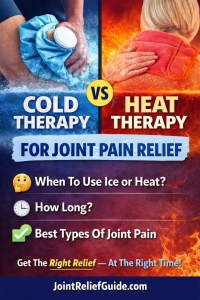
❄️🔥 Cold Therapy vs Heat Therapy For Joint Pain Relief: Which One Actually Works?
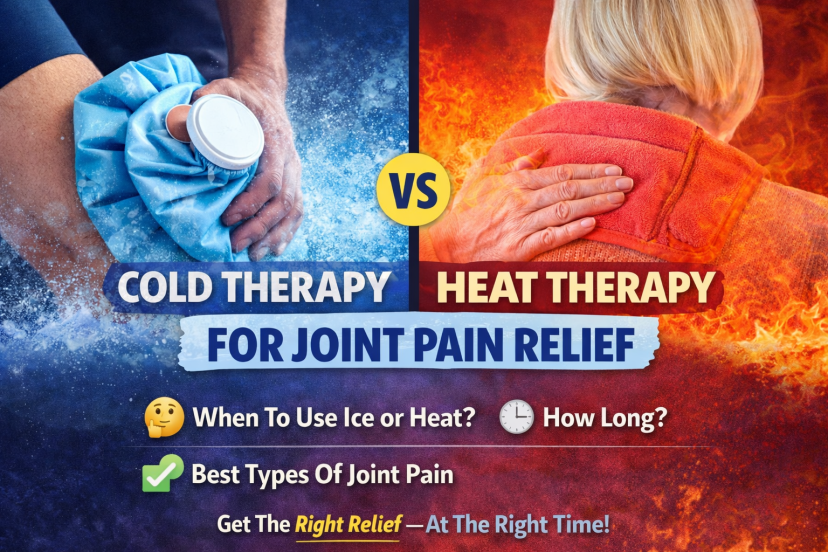
🦵 Ice Or Heat—Why The Choice Matters For Aching Joints
If you live with joint pain, stiffness, or swelling, you’ve probably asked yourself this question more than once:
Should I use ice or heat right now?
For adults over 40, joint pain can show up in the knees, hips, shoulders, hands, or lower back—sometimes suddenly, sometimes as a daily ache. Using the wrong therapy at the wrong time can make symptoms worse, while the right choice can bring fast, noticeable relief.
This guide breaks down cold therapy vs heat therapy for joint pain relief in a clear, evidence-based way. You’ll learn when to use each option, how to apply them safely, and how to combine them with natural strategies that support long-term joint comfort and mobility.
❄️🔥 Understanding Cold Therapy Vs Heat Therapy for Joint Pain Relief
Cold and heat therapy work in opposite ways, which is why choosing correctly matters.
❄️ How Cold Therapy Works
Cold therapy (cryotherapy) reduces blood flow to an area, which helps calm inflammation and numb pain signals.
Cold pack joint pain remedy benefits include:
-
Reducing swelling
-
Dulling sharp or throbbing pain
-
Slowing nerve activity
🔥 How Heat Therapy Works
Heat therapy increases blood flow, relaxes muscles, and improves tissue flexibility.
Heat therapy joint pain knees hips benefits include:
-
Reducing stiffness
-
Relaxing tight muscles
-
Improving joint mobility
Understanding these differences is the foundation of using ice vs heat joint relief correctly.
🦵 Types Of Joint Pain And How They Respond To Ice Or Heat
Not all joint pain is the same. The cause of your pain often determines whether cold or heat works better.
❄️ Joint Pain That Responds Best To Cold Therapy
-
Recent injuries or flare-ups
-
Swollen or warm joints
-
Acute inflammation
-
Overuse pain after activity
Cold therapy is especially helpful for:
-
Knee swelling after walking
-
Shoulder pain after lifting
-
Ankle or wrist inflammation
🔥 Joint Pain That Responds Best To Heat Therapy
-
Chronic stiffness
-
Morning joint tightness
-
Muscle-related joint discomfort
-
Arthritis-related aches
Heat therapy joint pain knees hips relief is often ideal for:
-
Osteoarthritis stiffness
-
Hip tightness after sitting
-
Shoulder stiffness before exercise
❄️ When To Use Cold Therapy For Joint Pain Relief
Cold therapy works best during the inflammatory phase of joint pain.
✅ Use Cold Therapy When You Have:
-
Swelling or puffiness
-
Sharp pain
-
Pain after exercise
-
A joint that feels warm to the touch
🧊 Safe Cold Therapy Guidelines
-
Apply a cold pack for 15–20 minutes
-
Use a cloth barrier between ice and skin
-
Wait at least 1 hour between sessions
-
Stop if numbness or burning occurs
Using cold therapy vs heat therapy for joint pain relief incorrectly—such as icing stiff, non-inflamed joints—can increase tightness.
🔥 When To Use Heat Therapy For Joint Pain Relief
Heat therapy is best when inflammation has settled but stiffness remains.
✅ Use Heat Therapy When You Have:
-
Chronic joint stiffness
-
Reduced range of motion
-
Muscle tension around joints
-
Morning arthritis pain
♨️ Safe Heat Therapy Guidelines
-
Apply heat for 15–30 minutes
-
Use warm—not hot—temperatures
-
Avoid heat on swollen or inflamed joints
-
Never sleep with a heating pad on
Heat therapy joint pain knees hips relief is especially effective before gentle movement or stretching.
❄️🔥 Ice Vs Heat Joint Relief: Side-By-Side Comparison
❄️ Cold Therapy Pros
-
Reduces inflammation quickly
-
Helpful for acute flare-ups
-
Numbs pain
❄️ Cold Therapy Cons
-
Can increase stiffness if overused
-
Not ideal for chronic pain
🔥 Heat Therapy Pros
-
Improves flexibility
-
Eases stiffness
-
Relaxes surrounding muscles
🔥 Heat Therapy Cons
-
Can worsen swelling
-
Not for acute injuries
The key question is when to use heat or ice joints, not which one is “better.”
🦵 Using Cold And Heat Together (Contrast Therapy)
Some people benefit from alternating cold and heat—especially for chronic joint pain with occasional flare-ups.
🔄 How Contrast Therapy Works
-
Cold reduces inflammation
-
Heat restores movement and comfort
✅ Simple Contrast Method
-
Cold for 10 minutes
-
Heat for 15 minutes
-
Repeat once if needed
This method should be avoided if swelling is severe.
🌿 Supporting Joint Therapy With Natural Remedies
Cold and heat therapy work best when combined with lifestyle support.
💊 Natural Supplements For Joint Comfort
-
Glucosamine & chondroitin – cartilage support
-
Turmeric (curcumin) – inflammation control
-
Omega-3 fatty acids – joint lubrication
-
Collagen peptides – connective tissue support
Many U.S. adults use these supplements daily to reduce reliance on pain medications.
🥗 Anti-Inflammatory Diet For Better Joint Results
What you eat influences how well cold therapy vs heat therapy for joint pain relief works.
🥑 Joint-Friendly Foods
-
Fatty fish (salmon, sardines)
-
Leafy greens
-
Berries
-
Olive oil
-
Nuts and seeds
🚫 Foods That Increase Inflammation
-
Added sugars
-
Ultra-processed foods
-
Excess alcohol
Nutrition helps calm inflammation from the inside out.
💪 Gentle Exercises That Pair Well With Heat Or Cold
🧊 Best Exercises After Cold Therapy
-
Light range-of-motion movements
-
Gentle walking
-
Low-impact stretching
🔥 Best Exercises After Heat Therapy
-
Joint mobility drills
-
Yoga or Pilates
-
Strength exercises with light resistance
Using ice vs heat joint relief correctly makes movement safer and more comfortable.
🚑 When To See A Doctor About Joint Pain
While home therapies are helpful, seek medical care if you experience:
-
Persistent swelling
-
Severe or worsening pain
-
Joint redness or warmth lasting days
-
Sudden loss of movement
A healthcare provider may recommend imaging, physical therapy, or additional treatments.
❓ FAQs: Cold Therapy Vs Heat Therapy For Joint Pain Relief
1. Which is better: cold therapy or heat therapy for joint pain relief?
Neither is universally better. Cold works best for inflammation, while heat helps with stiffness and chronic pain.
2. Can I use ice and heat on the same day?
Yes. Many people use ice after an activity and heat later to relax stiff joints.
3. How long should I use a cold pack for joint pain?
Limit cold applications to 15–20 minutes per session.
4. Is heat safe for arthritis pain?
Yes. Heat therapy joint pain knees hips relief is often effective for arthritis stiffness.
5. Can ice make joint pain worse?
Yes, if used on stiff, non-inflamed joints, ice can increase tightness.
6. Should I use heat before exercise?
Heat can help loosen joints before gentle movement or stretching.
7. Do doctors recommend ice or heat?
Doctors often recommend ice for acute pain and swelling, heat for chronic stiffness.
🌟 Conclusion: Use The Right Tool At The Right Time
Choosing between cold therapy vs heat therapy for joint pain relief isn’t about preference—it’s about timing and symptoms. Ice calms inflammation. Heat restores movement. When used correctly, both can reduce pain, improve mobility, and help you stay active as you age.
Listen to your joints, support them with healthy habits, and use cold or heat as a smart, natural part of your joint care routine.
⚠️ Medical Disclaimer
This article is for educational purposes only and does not replace professional medical advice. Always consult a qualified healthcare provider before starting new treatments or supplements.
 Explore more:
- Joint Pain Relief Hips Knees For Desk Workers
- Ankle Joint Pain During Yoga Poses
- Knee Joint Pain When Climbing Stairs: Why It Happens