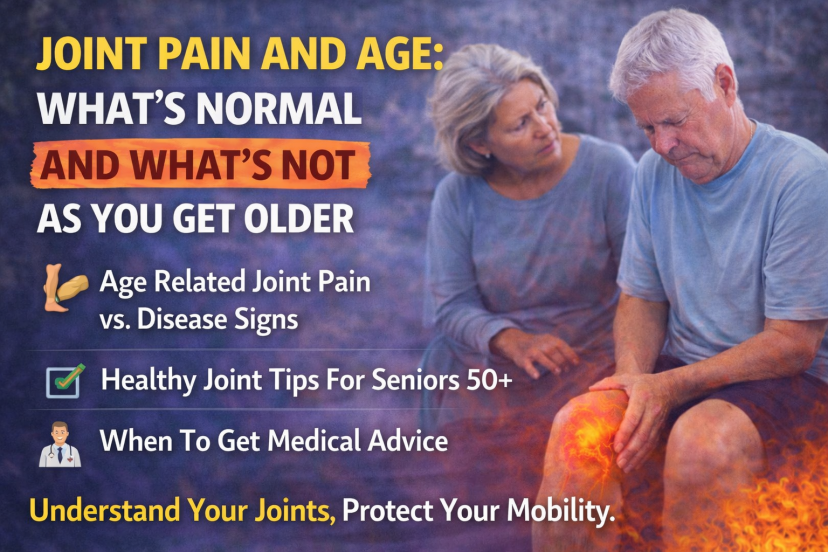
Joint Pain and Age: What’s Normal and What’s Not as You Get Older
🦵 Is Joint Pain Just “Part of Getting Older”?
If you’re over 50 and waking up with stiff knees, achy hips, or sore fingers, you’ve probably asked yourself:
“Is this just normal aging—or something more serious?”
You’re not alone. Many adults assume joint pain is inevitable with age and simply tolerate discomfort longer than they should. While some age related joint pain is normal, persistent or worsening symptoms may signal treatable conditions that deserve attention.
This guide will help you understand the difference between normal aging joints and potential joint disease, so you can take smart, proactive steps to protect your comfort, mobility, and independence.
🔍 Understanding Age Related Joint Pain
Age related joint pain refers to mild, gradual changes in joints that happen over time. These changes often develop slowly and feel manageable at first.
What Happens To Joints As We Age
-
Cartilage becomes thinner and less resilient
-
Synovial fluid (joint lubrication) decreases
-
Muscles supporting joints weaken
-
Tendons and ligaments lose flexibility
These shifts explain why aging joints may feel stiff in the morning or sore after activity.
❓ What’s Considered Normal Joint Pain With Aging?
Not all joint discomfort is a red flag.
✅ Normal Signs Of Aging Joints
-
Mild stiffness after sleeping or sitting
-
Temporary soreness after physical activity
-
Occasional joint aches that improve with movement
-
Slower recovery after exertion
For many adults, this type of joint pain over 50 improves with gentle movement, stretching, or heat.
🚩 What’s NOT Normal Joint Pain As You Age
Some symptoms suggest more than typical wear and tear.
❌ Warning Signs That Aren’t Normal
-
Pain that worsens instead of improving
-
Swelling, warmth, or redness in a joint
-
Sharp or stabbing pain
-
Joint locking or instability
-
Pain that interferes with sleep
-
Loss of range of motion
These signs may point to arthritis, inflammation, or injury rather than simple age related joint pain.
📌 Common Conditions Mistaken For “Normal Aging”
Many people delay treatment because they assume pain is age-related.
Common Causes Of Abnormal Joint Pain
-
Osteoarthritis – cartilage breakdown
-
Rheumatoid arthritis – autoimmune inflammation
-
Bursitis or tendinitis – soft tissue inflammation
-
Meniscus or cartilage tears
-
Gout – uric acid crystal buildup
Early treatment can slow progression and improve long-term outcomes.
🦵 Joint Pain Over 50: Why It Feels Different
As we age, the body’s response to stress changes.
Why Pain Feels Worse With Age
-
Reduced collagen production
-
Increased baseline inflammation
-
Slower tissue repair
-
Less shock absorption in joints
That’s why seniors joint health requires more proactive care than in younger years.
🌿 Natural Ways To Manage Age Related Joint Pain
Many people successfully manage symptoms without relying solely on medications.
🧩 Home Therapies That Help Aging Joints
-
Heat therapy for stiffness
-
Cold therapy for swelling
-
Gentle stretching before activity
-
Warm showers in the morning
Consistency matters more than intensity.
💊 Supplements That Support Joint Health After 50
Many U.S. adults use supplements to support aging joints.
🩸 Common Joint Supplements
-
Glucosamine & chondroitin – cartilage support
-
Turmeric (curcumin) – inflammation reduction
-
Omega-3 fatty acids – joint lubrication
-
Collagen peptides – connective tissue support
These may help reduce discomfort when combined with lifestyle changes.
🥗 Anti-Inflammatory Diet For Aging Joints
What you eat directly affects joint inflammation.
🥑 Foods That Support Joint Health
-
Fatty fish (salmon, sardines)
-
Leafy greens
-
Berries
-
Olive oil
-
Nuts and seeds
🚫 Foods That Can Worsen Joint Pain
-
Added sugars
-
Ultra-processed foods
-
Excess alcohol
Diet plays a major role in managing age related joint pain.
💪 Best Exercises For Joint Pain Over 50
Movement keeps joints healthy—but it must be joint-friendly.
⭐ Safe Exercise Options
-
Walking
-
Swimming or water aerobics
-
Cycling
-
Light resistance training
Strong muscles reduce stress on aging joints and protect mobility.
🏥 How to Cope with Joint Pain as You Get Older
As you get older, coping with joint pain starts with understanding your body and making supportive daily choices. Stay active with low-impact exercises like walking, swimming, or gentle stretching to keep joints flexible and strong.
Maintain a healthy weight to reduce stress on knees and hips. Use heat for stiffness and cold for swelling. Eat an anti-inflammatory diet rich in fruits, vegetables, healthy fats, and lean protein.
Consider joint-support supplements if appropriate. Most importantly, pace yourself, prioritize rest, and seek medical guidance when pain interferes with daily life.
🦵 Real-Life Coping Strategies For Seniors Joint Health
Daily habits can make or break joint comfort.
✅ Practical Joint-Saving Tips
-
Pace activities throughout the day
-
Use supportive footwear
-
Warm up before movement
-
Maintain a healthy body weight
-
Prioritize sleep
Small habits add up to long-term relief.
🚑 When To See A Doctor About Joint Pain
Don’t ignore symptoms that may indicate disease.
Seek Medical Advice If You Have:
-
Persistent swelling
-
Sudden joint pain without injury
-
Pain lasting longer than a few weeks
-
Fever with joint pain
-
Joint deformity or weakness
Early evaluation often prevents long-term damage.
❓ FAQs: Age-Related Joint Pain
1. Is joint pain a normal part of aging?
Mild stiffness is common, but ongoing pain is not always normal.
2. How do I know if joint pain is arthritis?
Arthritis pain is often persistent, worse with activity, and may include swelling or stiffness.
3. At what age does joint pain usually start?
Many people notice joint pain over 50, though changes can begin earlier.
4. Can age related joint pain be reversed?
Damage can’t always be reversed, but symptoms can often be managed effectively.
5. Does exercise help or hurt aging joints?
Proper exercise strengthens muscles and protects joints when done correctly.
6. Are supplements safe for seniors joint health?
Many are safe, but it’s best to discuss with a healthcare provider.
7. When should I worry about joint pain?
If pain limits daily activities or worsens, it’s time to seek medical advice.
💥 Conclusion: Aging Doesn’t Mean Accepting Pain
While age related joint pain is common, suffering in silence isn’t necessary—or helpful. Understanding what’s normal and what’s not empowers you to take action early, protect your joints, and stay active longer.
With smart habits, supportive nutrition, and timely care, aging joints can remain strong, flexible, and reliable for years to come.
⚠️ Medical Disclaimer
This content is for educational purposes only and does not replace professional medical advice. Always consult a qualified healthcare provider before starting new supplements, exercises, or treatments.
 Explore more:
- How To Choose A Joint Support Brace For Knees & Hips
- Hip Joint Pain After Running for Beginners
- Wrist Joint Pain When Typing or Using a Mouse