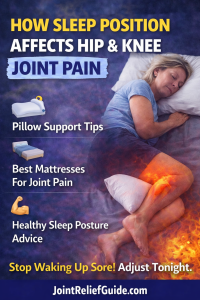
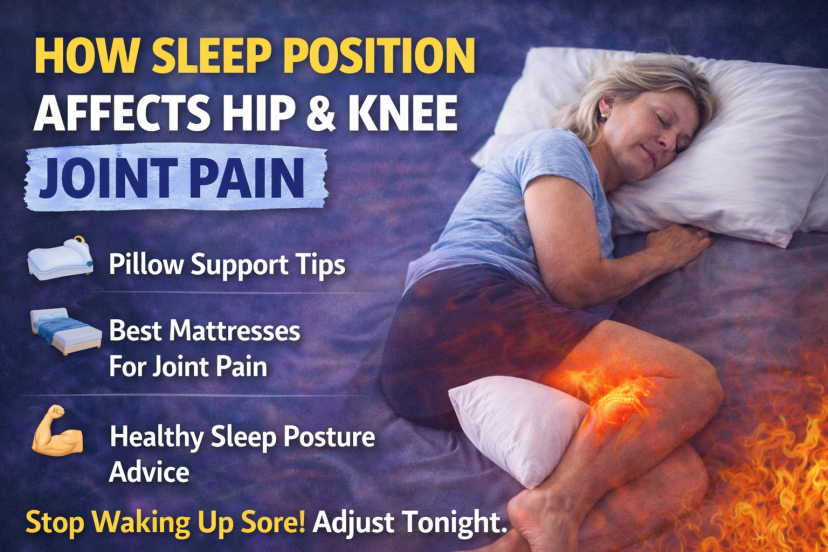
How Sleep Position Affects Hip & Knee Joint Pain (And How To Fix It Tonight)
🛌 Why Joint Pain Often Feels Worse In Bed
If your hips or knees ache most at night or first thing in the morning, you’re not imagining it. Many adults over 40 notice that joint pain seems to flare up during sleep—even when daytime activity feels manageable.
The reason is simple but often overlooked: how sleep position affects hip and knee joint pain is significant. The way your body lines up for 6–8 hours can either reduce joint strain or quietly make inflammation, stiffness, and pressure worse.
The good news? You don’t need a new diagnosis or expensive treatment to improve this. Small adjustments to sleep posture, pillow support, and mattress setup can dramatically reduce nighttime and morning joint pain.
This guide is practical, step-by-step, and designed to help you sleep more comfortably—starting tonight.
🦵 How Sleep Position Affects Hip And Knee Joint Pain
Sleep is when joints should recover. But poor alignment can do the opposite.
What Happens To Joints During Sleep
-
Muscles relax, leaving joints unsupported
-
Prolonged pressure builds on the hips and knees
-
Poor alignment strains cartilage and ligaments
-
Inflammation can increase overnight
That’s why knee joint pain sleep posture and hip discomfort are so common in side sleepers and restless sleepers.
🔍 Common Sleep Positions That Trigger Hip And Knee Pain
Let’s break down how different positions affect your joints.
😴 Side Sleeping And Joint Pain
Side sleeping is the most common position—but also one of the most problematic for joints.
Issues
-
The top knee pulls downward
-
Hips rotate forward
-
Knees press together
This explains why sleep position joint pain hip complaints are common in side sleepers.
😴 Back Sleeping And Joint Stress
Back sleeping can be helpful—but only if supported correctly.
Issues
-
Lower back arch increases
-
Knees hyperextend
-
Hips tilt forward
Without support, back sleeping can worsen stiffness in both hips and knees.
😴 Stomach Sleeping (Worst For Joints)
This position is hardest on joints and the spine.
Problems
-
Twists the hips unnaturally
-
Locks knees into extension
-
Increases lower-back strain
If possible, this position should be avoided for long-term joint health.
🦵 Best Sleep Position For Hip Joint Ache
If hip pain wakes you up at night, alignment is key.
✅ Best Option: Side Sleeping With Support
How To Do It Correctly
-
Sleep on your side
-
Place a firm pillow between your knees
-
Keep knees stacked—not twisted
-
Keep hips aligned with shoulders
This is often the best sleep position hip joint ache relief strategy.
🛏️ Alternative: Back Sleeping With Knee Support
Setup
-
Sleep flat on your back
-
Place a pillow under your knees
-
Keep feet relaxed, not pointed
This reduces pressure on the hips and lower back.
🦵 Best Sleep Position For Knee Joint Pain
Knees are sensitive to prolonged pressure and overextension.
✅ Pillow Support Knee Joint Pain Sleep Strategy
Side Sleepers
-
Pillow between knees (must be thick enough)
-
Avoid letting the top knee drop forward
Back Sleepers
-
Pillow under knees to reduce strain
-
Prevents hyperextension
These adjustments alone often reduce morning stiffness significantly.
🛏️ Pillow Support: The Most Underrated Joint Pain Fix
Most people focus on mattresses—but pillows do most of the alignment work.
🧸 Best Pillow Types For Joint Pain
-
Knee pillow (hourglass-shaped)
-
Firm standard pillow (budget-friendly)
-
Body pillow (for restless sleepers)
The goal is to keep the hips, knees, and ankles in a straight line.
🛏️ Mattress Choice And Joint Pain Relief
Your mattress affects pressure distribution for hours at a time.
🛏️ Mattress Features That Help Joint Pain
-
Medium-firm support
-
Pressure-relieving foam or hybrid layers
-
Even weight distribution
Too-soft mattresses let hips sink. Too-firm ones increase pressure points.
🌿 Nighttime Recovery Habits That Reduce Joint Pain
Sleep position matters—but so does what you do before bed.
🌿 Evening Joint-Friendly Habits
-
Gentle stretching (hips, quads, hamstrings)
-
Warm shower or heating pad (15 minutes)
-
Avoid heavy meals close to bedtime
These habits reduce inflammation and stiffness overnight.
💊 Supplements That Support Joint Comfort During Sleep
Many U.S. adults use supplements to reduce nighttime joint pain.
💊 Common Joint Supplements
-
Glucosamine & chondroitin – cartilage support
-
Turmeric (curcumin) – inflammation reduction
-
Omega-3 fatty acids – joint lubrication
These may help reduce morning stiffness when used consistently.
🥗 Diet And Inflammation: Why Dinner Matters
What you eat affects overnight inflammation levels.
🥗 Joint-Friendly Evening Foods
-
Lean protein
-
Vegetables
-
Healthy fats (olive oil, avocado)
🚫 Foods That Worsen Night Pain
-
Sugar-heavy desserts
-
Alcohol close to bedtime
-
Ultra-processed snacks
Reducing inflammation improves how sleep position affects hip and knee joint pain.
💪 Gentle Exercises That Improve Sleep Comfort
Movement earlier in the day supports better sleep posture at night.
💪 Joint-Friendly Exercises
-
Cycling
-
Water aerobics
-
Light strength training
Stronger muscles support joints while you sleep.
🧑 Real-Life Sleep Adjustments That Actually Work
Small changes add up.
✅ Practical Sleep Fixes
-
Reposition pillows if you wake up sore
-
Keep extra pillows nearby
-
Avoid falling asleep on the couch
-
Replace worn-out pillows yearly
These strategies help maintain joint-friendly alignment all night.
🚑 When To See A Doctor About Nighttime Joint Pain
Sleep adjustments help many people—but not all pain is positional.
See a healthcare provider if you have:
-
Persistent night pain
-
Swelling or redness
-
Joint locking or instability
-
Pain that wakes you repeatedly
These may signal arthritis progression or other conditions.
❓ FAQs: How Sleep Position Affects Hip And Knee Joint Pain
1. Can sleep position really cause hip and knee pain?
Yes. Poor alignment can strain joints for hours, increasing pain and stiffness.
2. Is side sleeping bad for hip pain?
Not if done correctly. Pillow support between the knees is essential.
3. What pillow is best for knee joint pain sleep posture?
A firm pillow or knee pillow that keeps knees aligned works best.
4. Does back sleeping help knee pain?
Yes—especially with a pillow under the knees.
5. Can a mattress cause joint pain?
Absolutely. Poor support increases pressure and misalignment.
6. Why is joint pain worse in the morning?
Inflammation builds overnight, especially with poor sleep posture.
7. How long does it take to feel improvement?
Many people notice reduced pain within a few nights of proper support.
💥 Conclusion: Better Sleep Position, Better Joint Relief
Understanding how sleep position affects hip and knee joint pain gives you real control over nighttime discomfort. With the right pillow placement, mattress support, and evening habits, you can reduce strain, improve sleep quality, and wake up moving more comfortably.
You don’t need perfection—just better alignment. Start with one small change tonight, and let your joints recover the way they’re meant to.
⚠️ Medical Disclaimer
This content is for educational purposes only and does not replace professional medical advice. Always consult a qualified healthcare provider before starting new treatments, supplements, or exercise routines.
 Explore more:
- Joint Pain and Age: What’s Normal and What’s Not
- Managing Joint Pain In The Morning
- Wrist Joint Pain When Typing or Using a Mouse