Foods That Help Joint Relief: How Nutrition Can Reduce Pain, Stiffness, And Inflammation
🦵 Can What You Eat Really Help Joint Pain?
If you wake up with stiff knees, sore hips, or aching fingers, you’re not alone. Millions of U.S. adults over 40 deal with joint pain daily — and many are surprised to learn how much nutrition affects how their joints feel.
While medications and exercise matter, foods that help joint relief play a powerful (and often overlooked) role in reducing inflammation, protecting cartilage, and supporting long-term mobility. What you eat every day can either calm irritated joints or quietly make symptoms worse.
The good news? You don’t need a perfect diet or expensive superfoods. With a few smart choices and simple habits, nutrition can become one of your strongest tools for joint comfort.
This guide explains how diet influences joint pain, which foods provide the most benefit, and how to build meals that actively support joint health.
🥗 How Diet Affects Joint Pain And Inflammation
✅ Why Food Matters For Your Joints
Joint pain is often linked to inflammation. Inflammation can be driven by:
- Poor dietary patterns
- Excess sugar and processed foods
- Nutrient deficiencies
- Imbalanced omega-6 to omega-3 intake
Over time, chronic inflammation damages cartilage, irritates joint lining, and increases stiffness — especially in the knees, hips, hands, and spine.
This is where joint health nutrition becomes essential. Anti-inflammatory foods help calm the immune response, reduce swelling, and improve joint lubrication.
🦴 Foods That Help Joint Relief By Reducing Inflammation
🐟 Fatty Fish: Omega-3 Powerhouses
Fatty fish are among the most studied anti-inflammatory foods for joints.
Best options include:
- Salmon
- Sardines
- Mackerel
- Anchovies
Omega-3 fatty acids help reduce joint stiffness and may slow cartilage breakdown. Many U.S. rheumatology guidelines recommend omega-3-rich foods as part of a joint-friendly diet.
Aim for:
- 2–3 servings per week
🌿 Leafy Greens And Colorful Vegetables
Vegetables provide antioxidants that protect joint tissue from inflammatory damage.
Top choices:
- Spinach
- Kale
- Swiss chard
- Broccoli
- Bell peppers
These foods supply vitamins C, E, and K — all important for collagen production and cartilage support.
🍓 Best Foods For Joint Pain Knees Hips: Everyday Fruits
✅ Berries And Citrus For Antioxidant Support
Fruits help fight oxidative stress that worsens joint discomfort.
- Blueberries
- Strawberries
- Oranges
- Grapefruit
- Cherries
Cherries, in particular, have been studied for reducing joint pain episodes due to their anti-inflammatory compounds.
🥑 Healthy Fats That Lubricate Joints Naturally
✅ Olive Oil And Nuts
Replacing processed oils with healthy fats supports long-term joint comfort.
- Extra virgin olive oil
- Walnuts
- Almonds
- Pistachios
Olive oil contains oleocanthal, a compound with effects similar to mild anti-inflammatory medications.
This makes it a cornerstone of any diet for joint pain relief.
🌾 Whole Foods That Support Joint Integrity
✅ Whole Grains Instead Of Refined Carbs
Switching from refined carbs to whole grains helps control inflammation and blood sugar spikes.
Better choices:
- Oats
- Brown rice
- Quinoa
- Whole wheat
Balanced blood sugar helps regulate inflammatory hormones that can aggravate joint pain.
💊 Nutrition Plus Supplements: A Smart Combination
Diet alone is powerful, but some nutrients are hard to get consistently from food.
💊 Popular Joint-Supporting Supplements
Many U.S. adults combine food-based nutrition with supplements such as:
- Glucosamine sulfate
- Chondroitin
- Turmeric (curcumin with black pepper)
- Omega-3 fish oil
- Collagen peptides
These supplements support cartilage, reduce inflammation, and complement foods that help joint relief when used correctly.
Always choose third-party tested supplements from trusted brands.
🚫 Foods That Can Worsen Joint Pain
Knowing what to limit is just as important.
❌ Common Inflammatory Triggers
- Added sugars
- Processed meats
- Deep-fried foods
- White bread and pastries
- Excess alcohol
Regular consumption of these foods is associated with increased joint inflammation and stiffness.
Reducing these triggers often leads to noticeable improvement within weeks.
🍽️ Building A Simple Joint-Healthy Daily Plate
✅ Balanced Meal Strategy
A joint-supportive plate includes:
- Lean protein (fish, chicken, beans)
- Colorful vegetables
- Healthy fats
- Whole grains
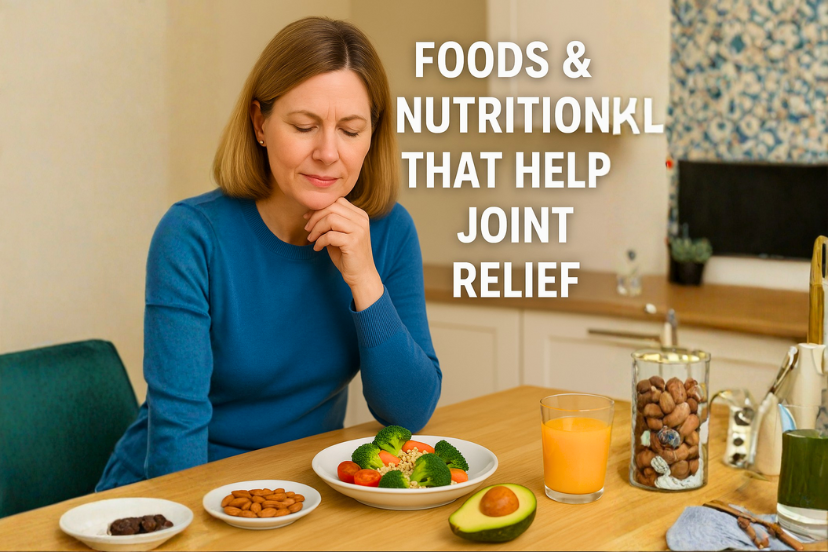
- Fruit for antioxidants
This approach supports inflammation control, muscle strength, and joint repair.
💪 How Nutrition Works With Exercise For Better Joint Relief
Food alone can’t do everything — movement matters.
✅ Nutrition + Movement = Joint Protection
Anti-inflammatory nutrition:
- Reduces exercise-related soreness
- Supports muscle recovery
- Improves joint flexibility
Gentle exercises like walking, swimming, and stretching work best when paired with strong joint health nutrition.
🧘♀️ Real-Life Coping Tips For Busy Adults
Eating for joint health doesn’t mean complicated recipes.
- Prep vegetables on weekends
- Keep frozen berries on hand
- Use olive oil as your main cooking fat
- Add fish twice a week
- Replace sugary snacks with nuts or fruit
Consistency beats perfection every time.
🩺 When To See A Doctor About Joint Pain
Diet helps many people, but medical guidance is important if:
- Joint pain persists despite lifestyle changes
- Swelling or redness appears
- Pain limits daily activity
- Stiffness lasts over one hour each morning
- Pain worsens over time
A healthcare provider may assess arthritis, inflammation, or other joint conditions.
❓ FAQs: Foods That Help Joint Relief
Q1: Can food really reduce joint pain?
Yes. Anti-inflammatory foods can significantly reduce pain and stiffness over time.
Q2: How long before diet changes help joints?
Many people notice improvement within 2–4 weeks of consistent changes.
Q3: Are nightshade vegetables bad for joints?
There’s limited evidence. Most people tolerate them fine unless they are personally sensitive.
Q4: Is coffee bad for joint pain?
Moderate coffee intake is usually fine. Excess sugar and cream cause more issues.
Q5: Should I completely avoid sugar?
Reducing added sugar is strongly recommended for joint health.
Q6: Are supplements better than food?
Food first. Supplements support nutrition, not replace it.
Q7: Can weight loss from diet reduce joint pain?
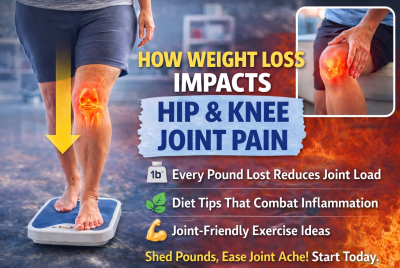
Yes. Even small weight reductions relieve pressure on the knee and hip joints.
🌟 Conclusion: Let Food Be Part Of Your Joint Relief Plan
Joint pain isn’t just about aging — it’s often about long-term habits. Choosing the right foods that help joint relief gives your body the tools it needs to calm inflammation, protect cartilage, and stay mobile.
You don’t need extreme diets. Start with small, steady improvements. Prioritize anti-inflammatory foods. Support your joints every day — and give yourself the best chance to move comfortably for years to come.
⚠️ Medical Disclaimer
This content is for educational purposes only and does not replace professional medical advice. Always consult a healthcare provider before making significant dietary changes or starting new supplements.
 Explore more:
- Why Do My Joints Crack And Pop?
- Workplace Joint Pain Prevention
- Low-Impact Cardio Options For Joint Pain Sufferers