How Weight Loss Impacts Hip & Knee Joint Pain: Why Every Pound Matters
🦵 When Extra Weight Becomes Extra Pain
If your hips or knees ache when you walk, climb stairs, or stand up from a chair, you’re not alone. Millions of adults over 40 in the U.S. live with daily joint pain—and many don’t realize how closely it’s tied to body weight.
The truth is simple but powerful: even modest weight loss can significantly reduce joint pain. You don’t need to reach an “ideal” weight to feel relief. Losing just a few pounds can meaningfully reduce stress on your hips and knees and help you move with less pain.
In this guide, we’ll explain how weight loss impacts hip and knee joint pain, break down the science in plain English, and share realistic strategies you can use to protect your joints and improve your quality of life.
🔍 How Weight Loss Impacts Hip And Knee Joint Pain At A Mechanical Level
Your hips and knees are weight-bearing joints. Every step you take multiplies the force passing through them.
💡 The Joint Load Reality (In Simple Terms)
-
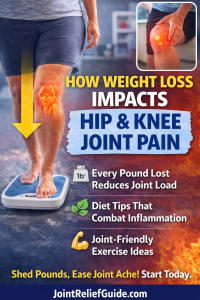
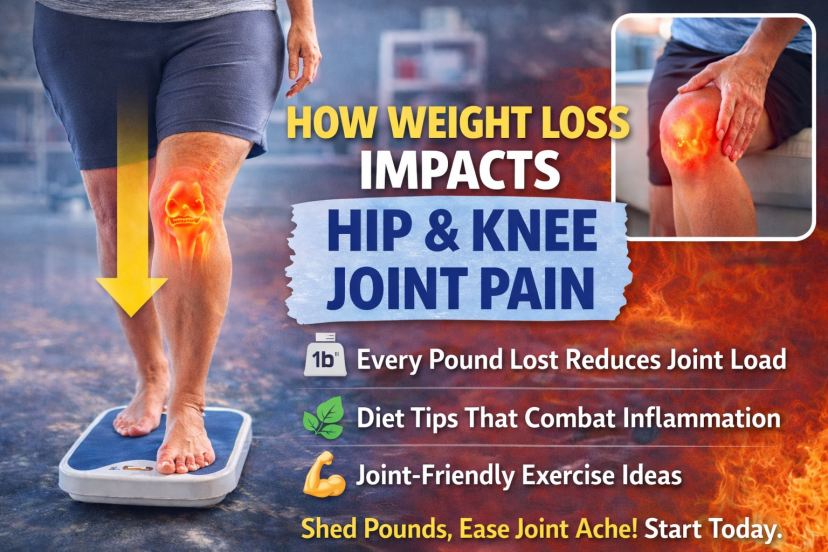
For every 1 pound of body weight lost, knee joint load is reduced by about 4 pounds per step
-
During daily activities, your knees may absorb 3–6 times your body weight
-
Hips also experience amplified forces during walking and standing
That means losing 10 pounds can reduce knee joint stress by 40 pounds per step—a major form of joint load weight loss knees hips benefit.
This is why doctors often emphasize weight reduction joint relief hips knees even before medications or injections.
🩸 Why Overweight Joint Pain Knees Hips Is So Common After 40
As we age, joints naturally experience wear and tear. Extra body weight accelerates that process.
Common Reasons Extra Weight Worsens Joint Pain
-
Increased cartilage compression
-
Faster cartilage breakdown
-
Higher inflammation levels
-
Reduced shock absorption
This combination explains why overweight joint pain knees hips often worsens over time if weight isn’t addressed.
🌈 Symptoms That Improve With Weight Reduction
Many people notice improvements surprisingly fast once weight begins to drop.
✅ Joint Pain Improvements Often Include
-
Less knee pain when walking
-
Reduced hip stiffness in the morning
-
Improved balance and stability
-
Less swelling after activity
These lose weight joint pain benefits often appear before major changes on the scale.
🌿 Inflammation: The Hidden Link Between Weight And Joint Pain
Weight affects joints not only mechanically—but chemically.
🔥 Fat Tissue And Inflammation
Fat tissue releases inflammatory compounds called cytokines. These can:
-
Increase joint swelling
-
Sensitize pain receptors
-
Worsen arthritis symptoms
Weight reduction joint relief hips knees works partly by lowering systemic inflammation, not just reducing load.
💪 How Much Weight Loss Is Needed For Joint Relief?
You don’t need dramatic weight loss to feel better.
📊 Realistic, Evidence-Based Targets
-
5% body weight loss → noticeable pain reduction
-
10% body weight loss → significant functional improvement
-
Gradual loss is better than rapid loss
For a 200-lb adult, losing just 10–20 pounds can substantially reduce joint load weight loss knees hips stress.
🥗 Diet Strategies That Support Weight Loss And Joint Health
Food choices directly affect both body weight and inflammation.
🌿 Anti-Inflammatory Foods For Joint Relief
-
Fatty fish (salmon, sardines)
-
Leafy greens and cruciferous vegetables
-
Berries
-
Olive oil
-
Nuts and seeds
🚫 Foods That Worsen Joint Pain
-
Sugary drinks
-
Refined carbohydrates
-
Ultra-processed foods
-
Excess alcohol
An anti-inflammatory eating pattern amplifies lose weight joint pain benefits.
💊 Natural Supplements That Support Joint Comfort During Weight Loss
As weight comes off, supplements can help protect joints.
💊 Commonly Used Joint Supplements In The U.S.
-
Glucosamine & chondroitin – cartilage support
-
Turmeric (curcumin) – inflammation reduction
-
Omega-3 fatty acids – joint lubrication
-
Collagen peptides – connective tissue support
These can complement weight reduction joint relief hips knees strategies, especially when combined with exercise.
💪 Gentle Exercises That Reduce Joint Load While Burning Calories
Movement is essential—but it must be joint-friendly.
🦵 Low-Impact Exercises For Hip And Knee Pain
-
Walking on flat surfaces
-
Swimming or water aerobics
-
Stationary cycling
-
Elliptical training
These activities promote weight loss while minimizing stress on joints already affected by overweight joint pain knees hips.
🧘 Strength Training: Protecting Joints While Losing Weight
Strong muscles reduce joint strain.
💪 Joint-Supportive Strength Focus
-
Quadriceps strengthening
-
Glute activation
-
Core stability
-
Hip abductor work
Muscle strength improves alignment and reduces joint load weight loss knees hips effects.
🧑 Real-Life Coping Strategies For Daily Joint Relief
Weight loss is a journey, not a switch.
✅ Practical Tips That Help Along The Way
-
Break activity into shorter sessions
-
Use supportive footwear
-
Apply heat for stiffness, cold for swelling
-
Track non-scale victories like walking distance
Consistency matters more than perfection.
🩺 When To See A Doctor About Hip Or Knee Pain
Weight loss helps many people—but not all joint pain is weight-related.
Seek medical advice if you experience:
-
Sudden or severe joint pain
-
Joint locking or instability
-
Persistent swelling
-
Night pain that disrupts sleep
-
Pain lasting longer than 2–3 weeks despite lifestyle changes
A healthcare provider may recommend imaging, physical therapy, or other treatments.
❓ FAQs: How Weight Loss Impacts Hip And Knee Joint Pain
1. How much weight do I need to lose to reduce knee pain?
Even losing 5–10 pounds can significantly reduce knee joint stress and pain.
2. Does weight loss help hip arthritis pain?
Yes. Reduced load and inflammation often improve hip pain and mobility.
3. Can losing weight reverse joint damage?
Weight loss can’t reverse cartilage loss, but it can slow progression and reduce pain.
4. Why does knee pain improve before hip pain?
Knees experience a higher force per step, so relief is often noticed sooner.
5. Is exercise safe if my joints already hurt?
Yes—low-impact exercise is usually safe and beneficial when done properly.
6. Do supplements help during weight loss?
Supplements like omega-3s and turmeric may help reduce inflammation and discomfort.
7. Can weight loss delay joint replacement surgery?
In some cases, yes. Reduced pain and improved function may postpone surgery.
💥 Conclusion: Small Weight Changes, Big Joint Relief
Understanding how weight loss impacts hip and knee joint pain can be empowering. Every pound lost reduces joint stress, lowers inflammation, and improves mobility. You don’t need extreme diets or intense workouts—just consistent, joint-friendly habits.
Start where you are. Focus on progress, not perfection. Your hips and knees will thank you with every pain-free step.
⚠️ Medical Disclaimer
This article is for educational purposes only and does not replace professional medical advice. Always consult a qualified healthcare provider before starting new diets, supplements, or exercise programs.
 Explore more:
- Best Anti-Inflammatory Smoothies For Joint Relief
- Joint Pain Relief Gadgets & Devices: What’s Worth It?
- Swimming For Joint Health