Joint Pain After Weight-Lifting: Hips & Shoulders — How To Train Without Destroying Your Joints
💪 When Strength Training Starts To Hurt
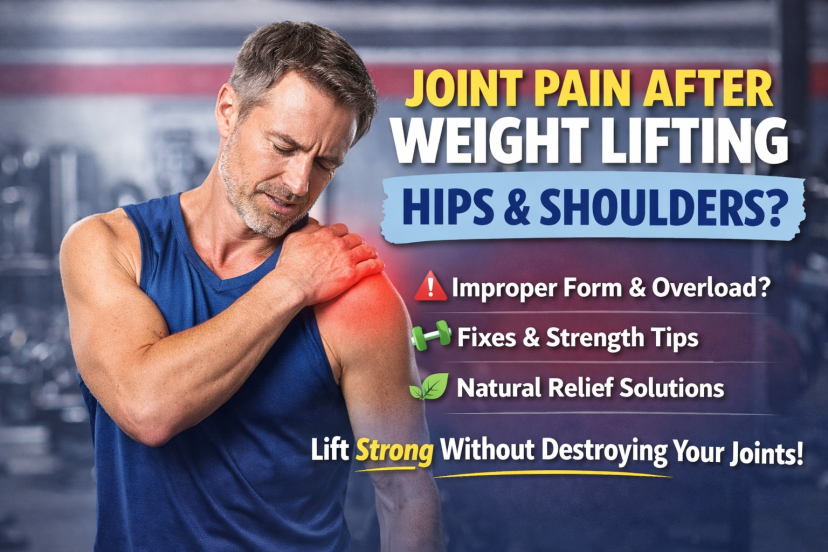
You hit the gym to feel stronger, healthier, and more capable — not stiff, sore, and worried about your joints. Yet for many adults over 40, joint pain after weight lifting in the hips and shoulders becomes an all-too-common problem. One day your squat feels powerful. The next, your hip aches when you stand up. Shoulder presses that once felt smooth now trigger a deep, nagging discomfort.
If this sounds familiar, you’re not broken — and you don’t need to quit lifting. Joint pain is often a signal, not a sentence. It usually means something in your form, load, recovery, or progression needs adjusting.
This guide is written for fitness-savvy adults who want to keep lifting without sacrificing joint health. You’ll learn what causes lifting-related joint pain, how to fix it, and how to build strength in a way that protects your hips and shoulders for the long run.
🦵 Understanding Joint Pain After Weight Lifting In Hips And Shoulders
Joint pain after weight lifting hips shoulders often develops gradually. Unlike muscle soreness, joint pain tends to feel:
-
Deep or achy inside the joint
-
Persistent beyond 48–72 hours
-
Worse with certain movements
-
Stiffer after rest or in the morning
Your hips and shoulders are ball-and-socket joints, designed for mobility. Heavy lifting places high forces through these joints — especially if form, mobility, or recovery is lacking.
Common Gym-Related Triggers
-
Gym joint pain hips from deep squats without hip mobility
-
Weightlifting shoulder joint ache from pressing with poor scapular control
-
Joint pain when lifting heavy objects without a proper warm-up
-
Lifting-induced hip joint pain from limited glute activation
The good news? Most of these issues are modifiable.
💪 Why Weight Lifting Can Stress Hips And Shoulders
🦴 Mechanical Load And Joint Compression
Heavy compound lifts compress joint surfaces. When loads exceed your joint’s current tolerance, cartilage and surrounding tissues become irritated.
🔄 Repetitive Patterns Without Balance
Doing bench press and overhead press but skipping rows, face pulls, and mobility work creates shoulder imbalances. The same applies to quad-dominant leg training without glute support.
⏱️ Recovery Declines With Age
After 40, connective tissues recover more slowly. Without adequate rest, minor irritation becomes chronic joint pain after weight lifting hips shoulders.
🦵 Hip Joint Pain From Lifting: What’s Really Happening?
The hip absorbs force during squats, lunges, deadlifts, and step-ups. Pain often signals compensation.
Common Causes Of Gym Joint Pain Hips
-
Limited hip mobility forces the lower back or knees to compensate
-
Weak glutes shift the load into the hip joint
-
Excessive depth without control
-
Poor bracing under heavy load
Hip Pain Red Flags
-
Sharp pain at the bottom of squats
-
Pain when standing from a chair
-
Clicking or catching sensations
These signs suggest lifting-induced hip joint pain, not just muscle soreness.
💪 Shoulder Joint Pain From Weight Training
Shoulders rely on coordination more than brute strength.
Why Weightlifting Shoulder Joint Ache Is So Common
-
Overhead pressing without shoulder mobility
-
Internal rotation dominance from bench pressing
-
Weak rotator cuff stabilizers
-
Poor scapular movement
Shoulder pain often feels worse when pressing, reaching overhead, or sleeping on the affected side.
🌿 Corrective Exercises To Protect Hips And Shoulders
Corrective work doesn’t mean “light” or “easy.” It means smart.
🦵 Hip-Friendly Exercises
-
Glute bridges – reinforce hip extension
-
Goblet squats – improve depth control
-
Step-ups – build unilateral stability
-
Hip airplanes – enhance joint control
💪 Shoulder-Saving Movements
-
Face pulls – restore scapular balance
-
External rotations – strengthen stabilizers
-
Landmine presses – joint-friendly pressing
-
Scapular push-ups – improve shoulder mechanics
These movements reduce joint pain when lifting heavy by distributing the load properly.
💪 Warm-Up Protocols That Actually Prevent Joint Pain
A rushed warm-up is one of the biggest contributors to joint pain after weight lifting hips shoulders.
✅ Effective Joint-Smart Warm-Up
-
5 minutes of light cardio to increase blood flow
-
Dynamic mobility drills for hips and shoulders
-
Activation exercises for the glutes and rotator cuff
-
Progressive loading sets before heavy lifts
Skipping this step increases injury risk — especially for aging joints.
🌿 Recovery Strategies That Calm Inflammation
❄️ At-Home Joint Recovery Tools
-
Cold therapy for post-workout inflammation
-
Heat therapy for stiffness and mobility
-
Foam rolling for surrounding muscles
-
Sleep optimization for tissue repair
💊 Natural Supplements For Joint Support
Many U.S. adults use supplements to reduce joint pain after weight lifting hips shoulders.
-
Glucosamine & chondroitin – support cartilage health
-
Turmeric (curcumin) – helps reduce inflammation
-
Omega-3 fatty acids – support joint lubrication
-
Collagen peptides – may aid connective tissue
Always choose third-party tested U.S. brands and consult a professional if needed.
🥗 Anti-Inflammatory Nutrition For Lifters
What you eat influences joint recovery as much as how you train.
🥑 Joint-Friendly Foods
-
Fatty fish like salmon
-
Leafy greens and berries
-
Olive oil and nuts
-
Lean proteins for repair
🚫 Foods That Worsen Joint Pain
-
Ultra-processed snacks
-
Alcohol-heavy weekends
Nutrition plays a major role in managing gym joint pain, hips, and shoulders.
💪 Smart Strength Progressions That Protect Joints
Progression doesn’t mean adding weight every week.
✅ Joint-Safe Progression Strategies
-
Increase reps before load
-
Use tempo control
-
Rotate heavy and light weeks
-
Prioritize pain-free ranges of motion
Training through pain often turns minor irritation into long-term joint pain from lifting heavy.
🚑 When To See A Doctor
While most lifting-related joint pain improves with proper management, seek medical care if you experience:
-
Pain lasting longer than 2–3 weeks
-
Swelling or redness around the joint
-
Sharp or worsening pain with daily activities
-
Night pain that disrupts sleep
-
Loss of strength or range of motion
A sports medicine provider or physical therapist can identify structural issues early.
❓ FAQs About Joint Pain After Weight Lifting Hips Shoulders
1. Is joint pain after weight lifting hips shoulders normal?
Mild discomfort can occur, but persistent pain usually indicates an improper load, form, or recovery pattern that should be addressed.
2. Should I stop lifting if my hips or shoulders hurt?
Not necessarily. Modify exercises, reduce load, and focus on mobility instead of stopping completely.
3. How long should joint pain last after a workout?
Joint pain should improve within 48–72 hours. Longer-lasting pain suggests inflammation or strain.
4. Can supplements really help joint pain from lifting?
Yes. Supplements like omega-3s, turmeric, and glucosamine may reduce inflammation and support joint health when used consistently.
5. Are deep squats bad for hip joints?
Deep squats aren’t harmful if mobility and control are adequate. Problems arise when depth exceeds joint tolerance.
6. Why does shoulder pain worsen with overhead lifts?
Poor shoulder mobility or weak stabilizers often cause weightlifting shoulder joint ache during overhead movements.
7. Can aging joints still handle heavy lifting?
Absolutely. With proper programming, recovery, and technique, adults over 40 can lift safely and effectively.
💪 Conclusion: Lift Stronger — Not Through Pain
Joint pain after weight lifting hips shoulders doesn’t mean your training days are over. It means your body is asking for smarter strategies. By improving form, respecting recovery, supporting joint nutrition, and choosing joint-friendly progressions, you can stay strong without sacrificing comfort or mobility.
Strength training should build confidence — not fear. Protect your joints now, and they’ll support you for years to come.
⚠️ Medical Disclaimer
This content is for educational purposes only and does not replace professional medical advice. Always consult a qualified healthcare provider before starting supplements or modifying exercise routines.
 Explore more:
- Why Do My Joints Crack And Pop?
- Foods That Help Joint Relief
- Low-Impact Cardio Options For Joint Pain Sufferers